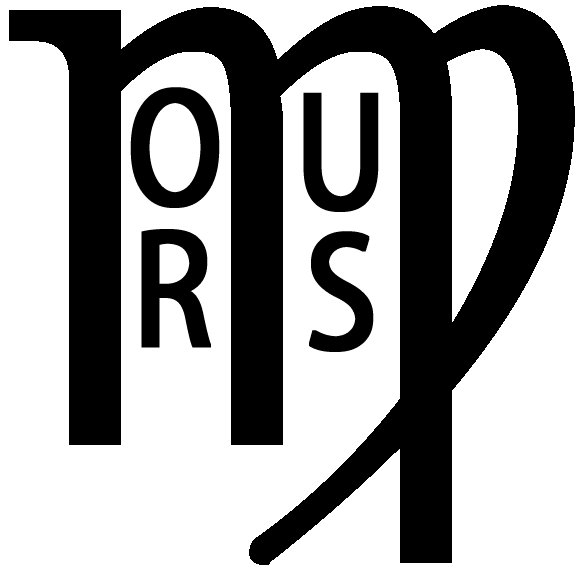
ORMUS
the
Word
One of the
passages from Holy Blood, Holy Grail
that Hudson is probably referring to is:
In 1188
the Ordre de Sion is also said to have
modified its name adopting the one which has allegedly obtained to the
present-the Prieure de Sion. And as a kind of subtitle it is said to
have
adopted the curious name “Ormus.” This subtitle was supposedly used
until 1306-a
year before the arrest of the French Templars. The device for “Ormus”
was m and
involves a kind of acrostic or anagram which combines a number of key
words and
symbols. Ours means “bear” in French--Lrrsus in Latin, an echo, as
subsequently
became apparent, of Dagobert II and the Merovingian dynasty, Orme is
French for
“elm.” Or, of course, is “gold.” And the M that forms the frame
enclosing the
other letters is not only an M but also the astrological sign for
Virgo-connoting, in the language of medieval iconography, Notre Dame.
Our
researches revealed no reference anywhere to a
medieval order or institution bearing the name Ormus. In this case we
could find
no external substantiation for the text in the Dossiers secrets, nor
even any
circumstantial evidence to argue its veracity. On the other hand, Ormus
does
occur in two other-radically different-contexts. It figures in
Zoroastrian
thought and in Gnostic texts, where it is synonymous with the principle
of
light. And it surfaces again among the pedigrees claimed by late
eighteenth-century Freemasonry. According to Masonic teachings, Ormus
was the
name of an Egyptian sage and mystic, a Gnostic “adept” of
http://observations.org/Spirit/KnightsTemplar.html
According
to the
Prieure's own documents, its history is long and convoluted. Its
earliest roots
are in some sort of Hermetic or Gnostic society led by a man named Ormus. This individual is said to have
reconciled paganism and Christianity[10]
Petrarch's
Preface to
his First Collection of Letters To his Friend "Socrates"
[p.130]
What now,
brother? We have tried almost everything, and nowhere have we found
peace. When
may we hope for that, and where shall we seek it? Time, as the saying
is, has
slipped between our fingers. Our early hopes are buried with our
friends. The
year 1348 has left us solitary and bereaved; and has taken from us what
all the
wealth of Ormus and of
"High
on a
throne of royal state, which far Outshone the wealth of Ormus
and of Ind, Or where the gorgeous East with richest hand
Showers on her kings barbaric pearl and gold, Satan exalted sat, by
merit
rais'd To that bad eminence."
Ormus and
The
First Englishmen
in
Account
of the Voyage
of Ralph Fitch, Merchant of
The
first city of
Hormuz, Strait
of,
strategic waterway, 30 to 50 mi (48 to 80 km) wide, between the
http://www.dataxinfo.com/hormuz/illustrations.htm

View of Hormuz from Braun-Hogenberg's Civitates
Orbis Terrarum
A plate in
Braun-Hogenberg's Civitates
Orbis Terrarum,

A 17th century map of
the
The 17th Century map clearly indicates the bell shaped island of Hormuz (‘Ormus’) at the Strait of Hormuz, the islands of ‘Larequa, Queixome’ and ‘Anga’ with sketches of the various fortifications including ‘Feitoriados Igrezes’ and ‘Comoram’ on the Persian mainland. To the left of the map, with north lying to the right, is a rugged brown depiction of the Musandam Peninsula with six outlying islands, one named ‘Ascalimas’ and the other ‘Cabodemo·Nsandam’.

Latin
for elm - ormus
French
for elm - orme
http://www.aloha.net/~watusi/
Make
what you like of
this webpage, it is merely here to entertain, guide, and possibly
teach. Watusi
is a nom de guerre for Ormus, a
mysterious person, about whom little has been said. Ormus
is a kind of anagram or acrostic which combines a number of
key words and symbols. References are to bears, elms and gold. It
figures in
Zoroastrian and Gnostic texts, where it is synonymous with the
principle of
light. According to Masonic teachings, Ormus
was the name of an Egyptian sage and mystic, a Gnostic "adept" of
http://www.mindspring.com/~jcrow/171/eccdoc.html
The
legend of Ormus, the Egyptian Priest converted in
apostolic times to Christianity, and transforming Egyptian Rites into a
mode
suitable to the Aeon of Osiris is, at least allegorically, a fair hint
of the
orderly continuity between ancient Near Eastern religions and the
Christian
Succession in the Eastern Churches, making it a suitable vehicle for
continuity
in the Aeon of Horus.
11. Am I right
that you choose
to name these materials ORMUS
elements? How did you get this name. For this last question I am just
curious,
because I am a member of group named ORMUS,
consisting of volunteers that gather, select and transport clothes,
food,
medical supplies, beds, bicycles, sewing machines etc. to support the
lives of
many in
Ormus - http://www.execulink.com/~idris/ormus.html
According to Masonic teachings, Ormus was the name
of an
Egyptian sage and mystic, a Gnostic 'adept' of
This story is plausible enough. During the first century A.D. Alexandria was a veritable hotbed of mystical activity, a crucible in which Judaic, Mithraic, Zoroastrian, Pythagorean, Hermetic and Neo-Platonic doctrines suffused the air and combined with innumerable others. It would hardly be surprising if one of the teachers adopted a name implying the principle of light.
In A.D. 46 Ormus is said to have conferred on his newly constituted 'order of initiates' a specific identifying symbol - a red or a rose cross. We may see in Ormus the origins of the so-called Rose-Croix, or Rosicrucians.
http://www.sinclairpress.com/notebook.2.html
According to HBHG, the secret order of the Prieuré de Sion, which supposedly guards this secret of the lineage of Jesus, appended to its name, at one point, that of Ormus (p.122). The name Ormus was written in such a way that the letter "m" was formed by the symbol for the astrological sign of Virgo - which the authors assert can be read as "Notre Dame" and indicates Mary Magdalene. Later on in the book, they propose that Mary Magdalene was the wife of Jesus. (By the way, the Greek text places a conjuction between Mary, or Maria, and Magdalene. That conjunction can be translated as "as" or "in truth," "verily.")
A likely origin for
the name
Ormus, according to the authors, is one Ormus, a gnostic sage and
mystic who ,
according to Masonic teachings, lived at
How the authors go from this Ormus to equating the symbol for Virgo, by which the name was written by the Prieuré de Sion, to a "woman" called Magdalene is beyond me. If this Ornus was an initiate in pagan mysteries, it seems clear to me that the symbol for Virgo would have referred to - Duh! - the astrological sign of Virgo.
This Ormus could have taken his name from Hormuz, the Persian deity presiding over the New Moon day, or from Hormuzd, the name of the Persian deity identified with the Roman Jupiter.
Additionally, when I reached for my Greek-English lexicon to look up Arima, a name not unknown to me from mythology (and incorporated in the biblical name Arimathea, i.e., Joseph from Arimathea, a place which the Int'l Standard Bible Encyclopaedia cannot identify with any certainty; theá means "goddess" in Greek) I found only a listing for Arimaspoí. Although, according to Herodotus, Arimaspoí means "one-eyed," another possible meaning is "horse of light," from the Old Median orim-açpa (açpa means "horse"). It strikes me then that the name Ormus could also be an abbreviation of orim, with the Latin ending -us attached.
http://www.bartleby.com/65/ho/Hormoz.html
(hôr´m z´´) (KEY) , Hormuz
(–m
z´´) (KEY) , Hormuz
(–m z´´,
hôrm
z´´,
hôrm z´) (KEY) or Ormuz
(ôr´–,
ôr–) (KEY
) , island
(1989 est. pop. 2,500), 5 mi (8.1 km) long and 3.5 mi (5.6 km) wide, S
Iran, in
the Strait of Hormuz (Hormoz), between the Persian Gulf and the Gulf of
Oman.
Salt and red ochre are produced. The town of
z´) (KEY) or Ormuz
(ôr´–,
ôr–) (KEY
) , island
(1989 est. pop. 2,500), 5 mi (8.1 km) long and 3.5 mi (5.6 km) wide, S
Iran, in
the Strait of Hormuz (Hormoz), between the Persian Gulf and the Gulf of
Oman.
Salt and red ochre are produced. The town of
Hi
Barry,
Wow!
I had no idea that the origin of the word ORMUS had such a history. And
then
again many modern words we take for granted as being new sometimes have
old
roots that link back to ancient times.
So
the word ORMIS can be linked to persons, places and things from long
ago -- and
is not just a new scientific word that relates to a new discovery of a
unique
form of matter. Interesting…
During
my research of the evolution of the graphical alphabet within my Spirit
of
Atlantis book project, I discovered that certain vowel and consonant
symbols
within many early words of the Latin Alphabet were interchangeable
because
spelling as we know it today was not the same back in ancient times. In
fact,
the most common spelling mistakes of today is the improper vowel
placement
within words.
So,
knowing this, I did a quick review of the word ORMUS in the dictionary
and
discovered some interesting views. The only word I could find in my
dictionary
without significantly changing vowels or consonants symbols that linked
to the
ORMUS word was “ormolu” -- which means “ground gold”. And speaking of
gold --
aurous, auric, aura, aureate, and even the chemical symbol of gold “Au”
can
also be linked to ORMUS because “aur” and “or” sounds the same.
Using
my alphabetical model of symbol origins from my Spirit of Atlantis book
project, the symbols within the word ORMUS reveal some concepts that
may
explain what the word means.
http://ourworld.cs.com/duanekmccullough/atlan011.htm
http://ourworld.cs.com/duanekmccullough/v2c5.htm
The
pictographic symbol of the letter “O” is the shape of the almighty
power of the
“Sun” or “Sol“. The pictographic symbol
of the capital letter “R” is the sideway view of the Sun rising over
the
horizon with a Ray of light beaming out. The pictographic symbol of the
capital
letter “M” is the mountain profile meaning “mount” or “high place”. The
pictographic symbol of the capital letter “U” means “two united” or
“union”.
And the pictographic symbol of the capital letter “S” is the symbol
“spirit” or
“spiral force”.
So,
by applying this information to the word ORMUS, the following words can
be
“extracted” from the letters. Sun, Ray, Mount,
Aurigua
was a powerful god-like character in ancient times that drove his
chariot
across the sky -- and like Zeus and even Jesus, had a glowing aureole.
And
speaking of the glowing aureole phenomenon, could the ORMUS subject
explain how
it may be possible to activate a part of the brain -- which is mostly
made of a
type of phosphorus, by which it could actually glow in low light
conditions?
Perhaps some Biblical saints knew how to accomplish this act by using
the ORMUS
materials in their diet. Interesting…
Sincerely,
Duane
McCullough www.lostfountain.com
www.spiritofatlantis.com
[1]The
Concise Columbia Encyclopedia is licensed from Columbia University
Press. Copyright © 1995 by